Unleashing the Dark Side of Typography: How Rumadarah Transforms Halloween Design
In the realm of visual communication, typography is rarely just about legibility. It is a mood setter, a narrative device, and often, the first indicator of what kind of experience awaits the viewer. When we speak of seasonal design, particularly for events centered around horror, mystery, or the macabre, the choice of typeface becomes the cornerstone of the aesthetic. Among the vast library of display fonts available to designers today, Rumadarah has emerged as a distinct and powerful tool for those looking to evoke genuine unease.
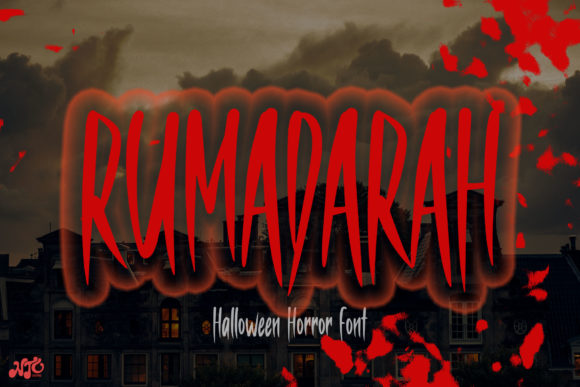
Rumadarah is not merely a font; it is an atmospheric element. Characterized by its creepy and dark appearance, this display font captures the essence of gothic horror while remaining versatile enough for modern digital and print applications. Whether you are a professional graphic designer crafting a poster for a local haunted house, a hobbyist creating DIY decorations, or a business owner planning a themed marketing campaign, understanding the specific utility of Rumadarah can elevate your projects from ordinary to unforgettable.
The Anatomy of Unease: Understanding Rumadarah’s Visual Identity
To appreciate why Rumadarah is suitable for any Halloween-related project, one must first analyze its structural characteristics. Unlike standard serif or sans-serif fonts that prioritize clarity above all else, display fonts like Rumadarah are designed to be seen, felt, and remembered. The font features irregular strokes, jagged edges, and a weight distribution that suggests decay, age, or supernatural origin.
The "creepy" factor of Rumadarah stems from its subtle imperfections. In typography, perfect symmetry can sometimes feel sterile or corporate. Rumadarah avoids this trap by incorporating variations in line thickness and slight distortions that mimic the look of hand-carved stone, scratched metal, or dried blood. These micro-details trigger a psychological response in the viewer, associating the text with danger, history, and the unknown.
Furthermore, the dark color palette associated with this font—often rendered in deep blacks, blood reds, or ghostly whites against contrasting backgrounds—enhances its impact. When used correctly, Rumadarah does not just sit on the page; it looms over it. This makes it perfectly suitable for any Halloween-related project or crafty idea where atmosphere is paramount.
Practical Applications Across Industries
The versatility of Rumadarah extends far beyond simple holiday decorations. Its ability to convey a specific tone allows it to be integrated into various professional and creative workflows. Below are several key areas where this font demonstrates significant value.
Event Marketing and Promotional Materials
For event organizers, the primary challenge is communicating the theme instantly. A flyer for a haunted maze, a murder mystery dinner, or a costume party needs to grab attention within seconds. Rumadarah serves this purpose effectively. Its bold, imposing nature ensures that headlines stand out even from a distance. When paired with high-contrast imagery, such as shadowed figures or eerie landscapes, the font reinforces the narrative before the audience reads a single word of the body copy.
Consider a local theater company promoting a production of Dracula. Using Rumadarah for the title creates an immediate expectation of classic horror tropes, setting the stage for the performance. It signals to the audience that they are about to enter a world of suspense and terror.
Merchandise and Apparel Design
The fashion industry, particularly streetwear and alternative subcultures, frequently draws inspiration from gothic and horror aesthetics. Rumadarah is an excellent choice for t-shirts, hoodies, and tote bags targeted at fans of the macabre. Its unique letterforms allow for creative logo designs that can be screen-printed or embroidered with striking results.
Because the font has a distinct personality, it reduces the need for excessive graphical elements. A simple phrase like "Nightmare Fuel" or "Fear Me" set in Rumadarah can be powerful on its own. This minimalism often leads to higher quality prints, as there is less ink required and fewer details that might blur during the manufacturing process.
Digital Content and Social Media
In the digital space, engagement is driven by visual disruption. On platforms like Instagram, Pinterest, and TikTok, users scroll rapidly through content. A thumbnail featuring Rumadarah stands out because it breaks the pattern of clean, minimalist web fonts commonly used in lifestyle blogging. Creators can use this font for quote graphics, countdown timers for Halloween events, or overlay text on video thumbnails.
However, digital usage requires careful consideration of resolution and readability. Since Rumadarah is a display font, it should be reserved for headlines and short phrases rather than long paragraphs. Using it for body text can strain the reader's eyes and reduce accessibility, which contradicts the goal of effective communication.
Crafting Immersive Experiences with Rumadarah
For hobbyists and makers, Rumadarah offers a bridge between traditional crafts and digital design. The rise of home printing technology and laser cutting has made it easier than ever to incorporate custom typography into physical objects. Here is how Rumadarah can be utilized in hands-on projects.
- Woodworking and Signage: The jagged edges of the font translate well into laser-cut wood signs. The contrast between the natural grain of the wood and the sharp, dark lines of the letters creates a rustic yet terrifying effect. Imagine a welcome sign for a haunted trail that looks like it was carved by a witch.
- Candle and Soap Labeling: Artisanal soap makers and candle creators often seek unique branding to differentiate themselves in a crowded market. A label featuring Rumadarah can transform a simple product into a thematic gift item. For example, a "Witch's Brew" bath bomb labeled in this font becomes a conversation piece.
- Stenciling and Painting: For large-scale installations, such as murals or window displays, the bold structure of Rumadarah makes it ideal for stenciling. The wide gaps between certain letters prevent paint bleed-through, ensuring crisp edges even when applied by hand with spray paint or brushes.
The only limit is your imagination. By treating the font as a texture rather than just text, creators can explore new dimensions of design. Layering Rumadarah over distressed textures, adding drop shadows that mimic flickering candlelight, or using metallic foils to highlight the sharp angles can result in stunning visual outcomes.
Best Practices for Implementation
While Rumadarah is a powerful asset, it requires strategic deployment to achieve the desired effect. Misuse can lead to cluttered designs that fail to communicate clearly. Here are some guidelines for integrating the font into your projects effectively.
Pairing with Complementary Fonts
One of the most common mistakes designers make is pairing two display fonts together, which creates visual chaos. To maintain balance, Rumadarah should be paired with simple, neutral typefaces for body text. A clean sans-serif font like Helvetica or a classic serif like Garamond provides a stable foundation that allows the headline to shine. The contrast between the ornate, dark Rumadarah and the understated body text creates a hierarchy that guides the viewer’s eye naturally.
Color Psychology
The effectiveness of Rumadarah is heavily dependent on color choice. While black is the default, experimenting with other colors can yield different emotional responses. Deep crimson evokes violence and passion, while sickly green suggests poison and decay. Purple can imply magic and royalty, fitting for a vampire-themed event. However, avoid bright, cheerful colors like neon yellow or pastel pink, as they clash with the font’s inherent darkness and dilute the intended mood.
Whitespace and Spacing
Given the intricate details of Rumadarah, adequate whitespace is crucial. Crowding the letters together can cause them to merge into an illegible blob, especially at smaller sizes. Allow the characters to breathe. Increasing tracking (letter spacing) slightly can enhance the eerie, isolated feeling of the words, making them appear more ominous.
Trends in Horror Typography
The landscape of horror design is evolving. Modern audiences are becoming desensitized to gore and shock value, leading to a shift towards psychological horror and atmospheric dread. Rumadarah aligns perfectly with this trend. It does not rely on explicit imagery to scare; instead, it uses form and suggestion to unsettle the viewer. This subtlety is increasingly valued in high-end design and immersive experiences.
Moreover, the integration of 3D effects and augmented reality is changing how typography is consumed. While Rumadarah is currently a 2D font, its strong geometric qualities make it a candidate for 3D modeling. Designers are beginning to extrude these letters into three-dimensional spaces, creating floating, decaying text that hovers over real-world environments. This fusion of physical and digital media represents the future of Halloween design, and Rumadarah is well-positioned to thrive in this emerging medium.
Conclusion
Selecting the right typography is a critical decision that influences the success of any Halloween-themed project. Rumadarah offers a unique combination of aesthetic appeal, emotional resonance, and practical versatility. Its creepy and dark looking display style makes it an indispensable tool for anyone looking to create impactful, memorable designs.
Whether you are designing a poster, crafting a handmade gift, or developing a digital campaign, remember that the font is more than just letters—it is a vessel for storytelling. By respecting its characteristics and applying it with intention, you can harness the power of Rumadarah to create works that linger in the minds of your audience long after the leaves have fallen. The only limit is your imagination, so let the darkness guide your creativity.